🌐 English

Seoul Smart Dental

Digital Implants

Precise, planned placement — Smart Implants

Many dental clinics provide implant treatment, but depending on who treats you,
the stability of treatment and long-term oral health can differ.

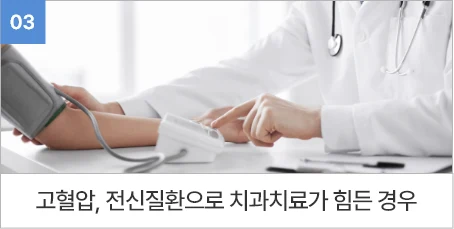
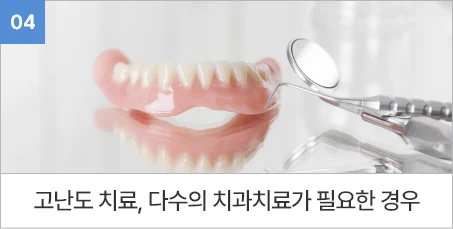
Seoul Smart Dental Clinic also performs implant surgery for patients who had difficulties after treatment elsewhere or who have systemic conditions,
with thorough diagnosis and systematic management.

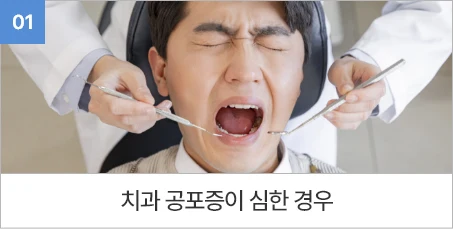
Sedation Implants

Under sedation, you can rest comfortably while the implant procedure is performed.

Implant surgery is often thought of as the most daunting dental treatment.
When natural teeth are lost, delaying the implant treatment that replaces them
can cause bigger problems in the surrounding tissue, so timing matters.
Don't let pain or frightening sounds make you miss the right time for implants!

Accuracy ↑Accurate care that reduces the burden on patients and improves working conditions for the clinician
Safety focusSedation in a light-sleep state, with real-time monitoring for careful care
Fear ↓Treatment received as if asleep, with less physical and psychological burden
Visits ↓Several areas can be treated in one day, minimizing the number of visits

If fear of pain is making you hesitate about implants,Sedation Implantswe recommend it!

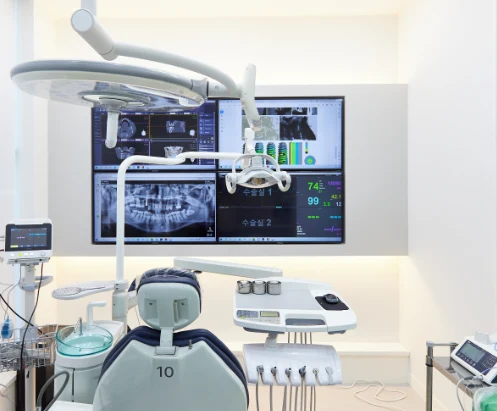
At Seoul Smart Dental Clinic, conscious sedation is given in a light-sleep state
to help reduce pain, fear and anxiety and prevent sudden movements, supporting comfortable and careful surgery.

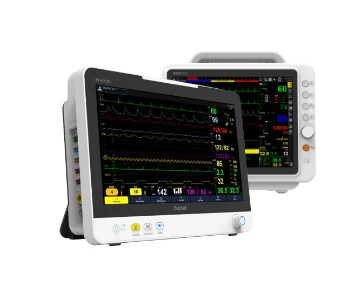
Oxygen saturation monitor

Brio x 30

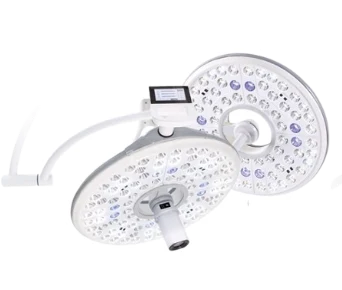
Surgical shadowless lamp

Luvis L400

Medical oxygen tank

Emergency equipment

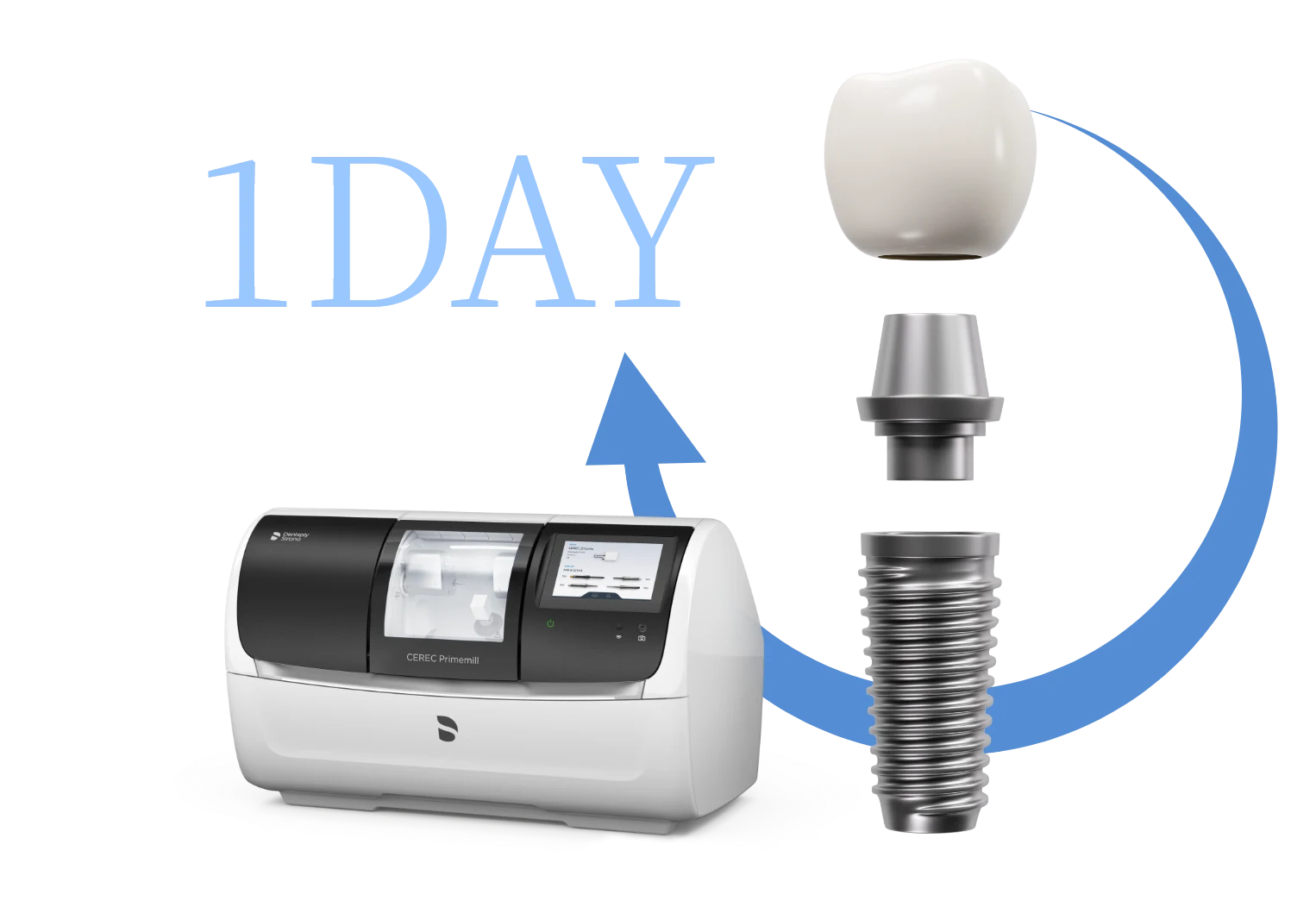
Same-day One-Day Implants

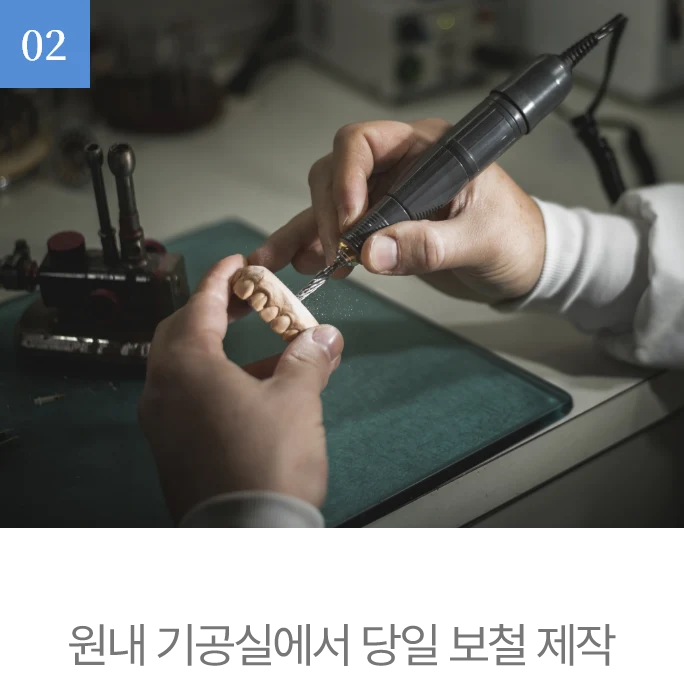
For those who have struggled with missing teeth, a temporary tooth can be attached on the day of the procedure, with care taken to minimize pain,
so you can eat light meals and return to daily life right away.

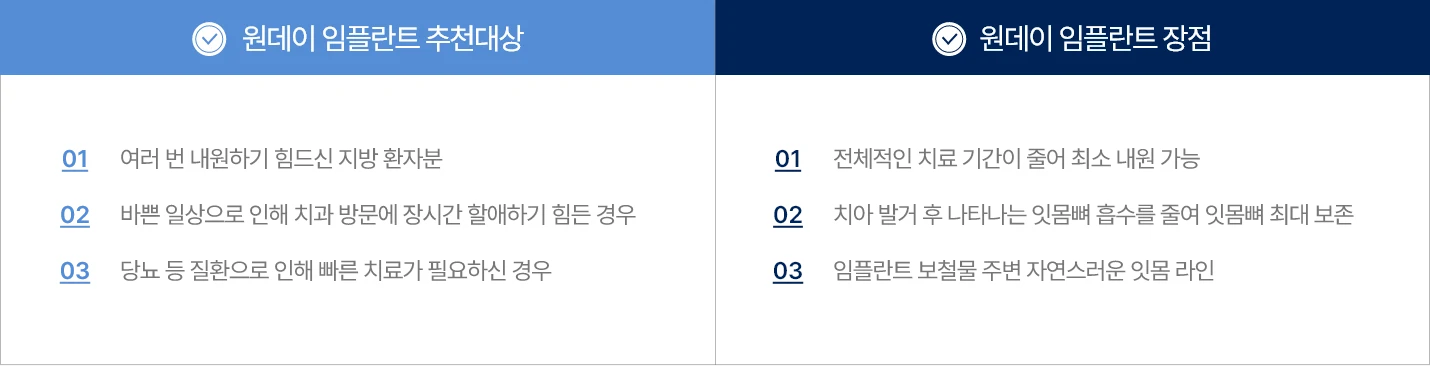
Recommended for
  1. Patients from other regions who find repeated visits difficult
  2. People too busy to spend long hours at the dentist
  3. Those who need prompt treatment due to conditions such as diabetes
Step 03

Navigation Implants

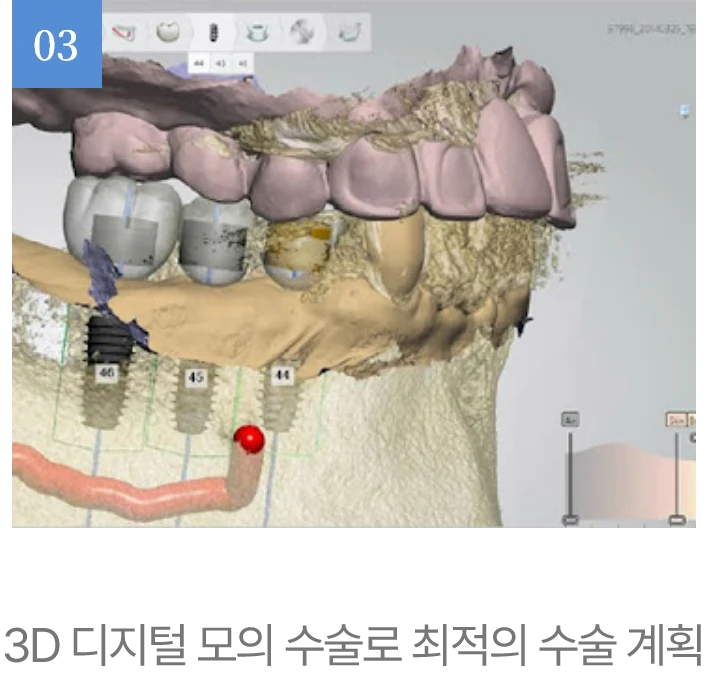
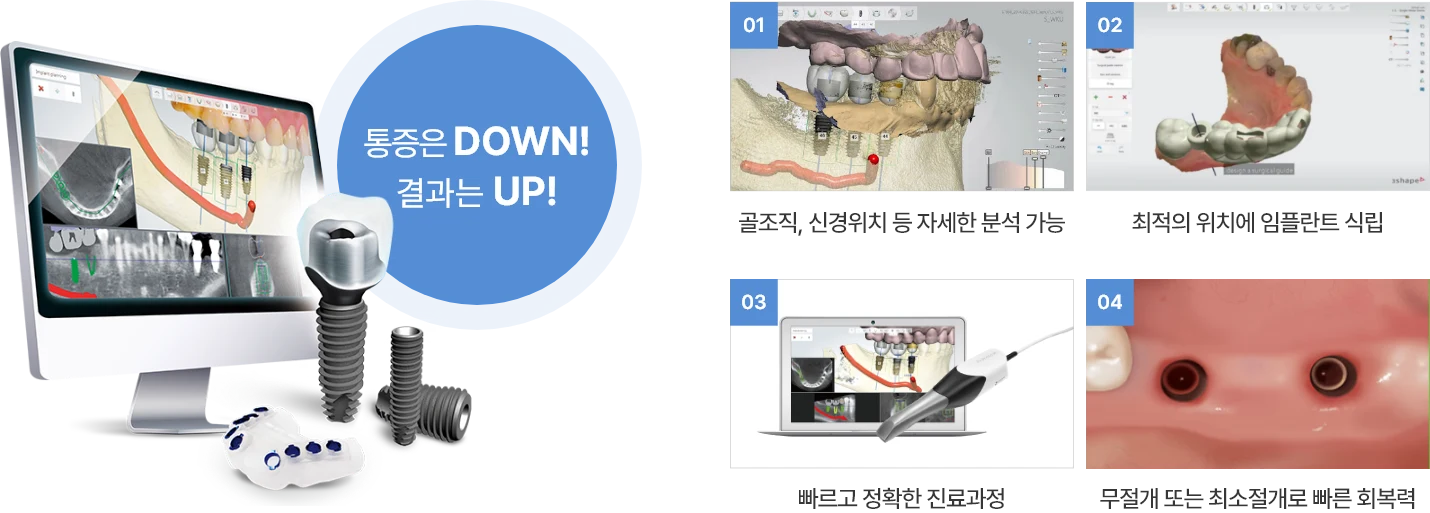
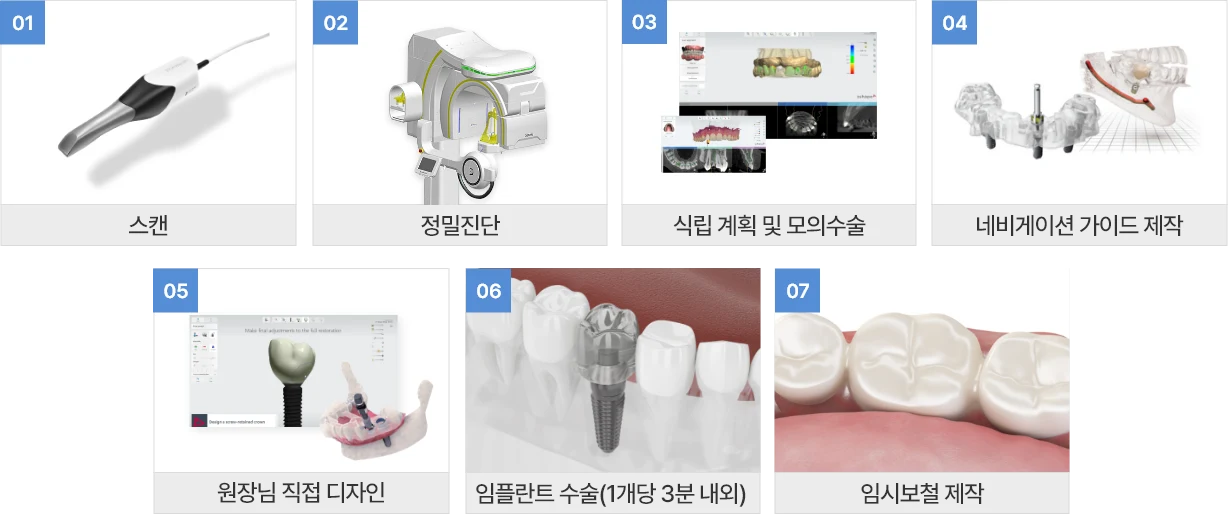
Implants are placed in the planned position with guided precision.

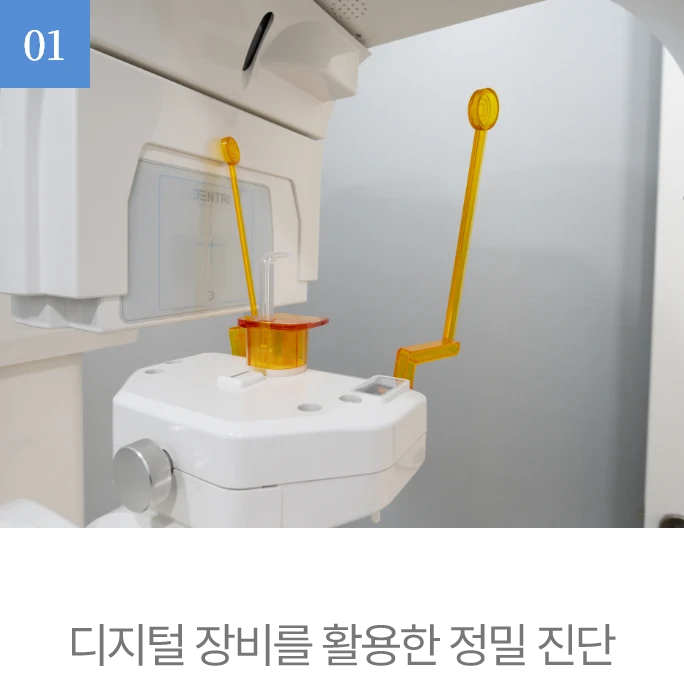
Navigation implants (= guided surgery) use 3D CT to precisely diagnose the patient's oral environment,
a system that lets us simulate on screen, in advance, the results of placing the implant in the planned position,

and because the simulated surgery can be checked on your actual oral condition beforehand, multiple implants can be placed stably.

Step 04

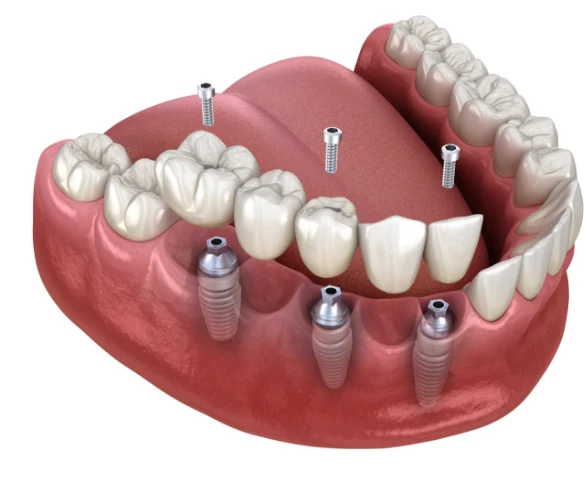
Full-Arch Implants

When few or no teeth remain, this procedure restores all teeth using implants.

There are 28 natural teeth: 14 in the upper jaw and 14 in the lower jaw.
When natural teeth are lost, multiple implants must be placed to restore them as they were.
As a large-scale procedure, full-arch implants call for skill and know-how built on extensive surgical experience.

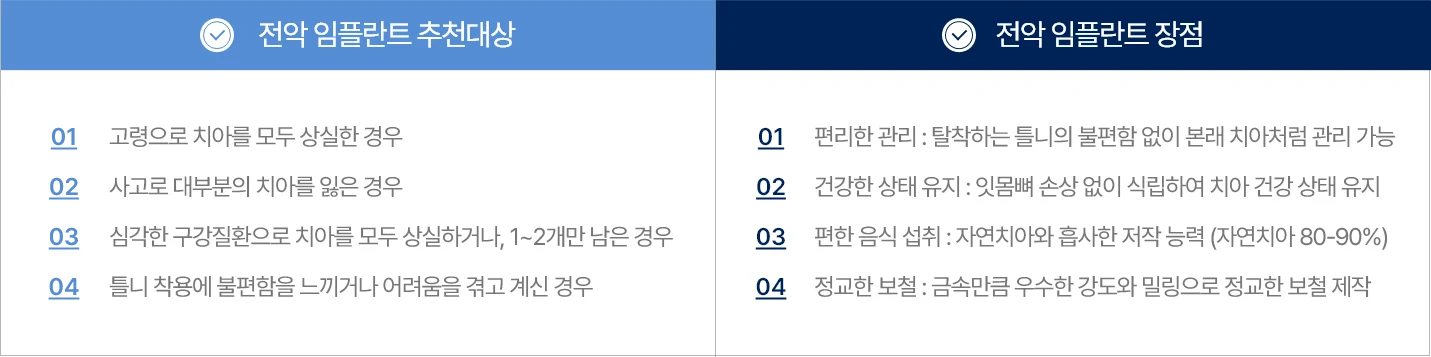
Full-arch implants are recommended for
  1. Those who have lost all their teeth with age
  2. Those who have lost most of their teeth in an accident
  3. Those who have lost all their teeth to serious oral disease, or have only 1–2 left
  4. Those who find dentures uncomfortable or difficult to wear
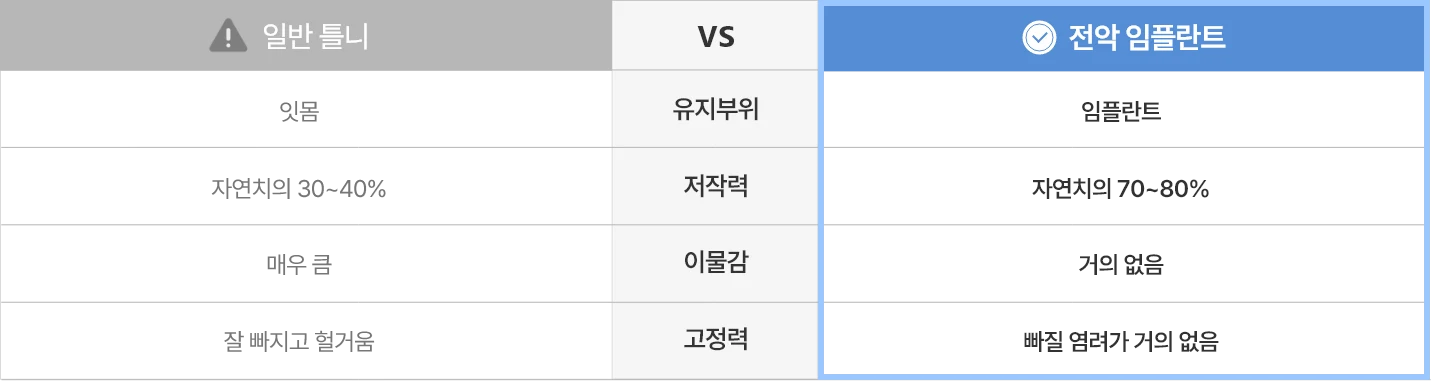
Conventional denturesCategoryFull-Arch Implants
GumsSupport areaImplants
Relatively lowerChewing forceCloser to natural teeth
Very noticeableForeign-body sensationMinimal
Tends to slip and feel looseRetentionStable fixation
Step 05

Bone Grafting Implants

When teeth have been missing for a long time or the gum bone has been lost due to gum disease,
there may not be enough bone, which can make implant placement difficult.
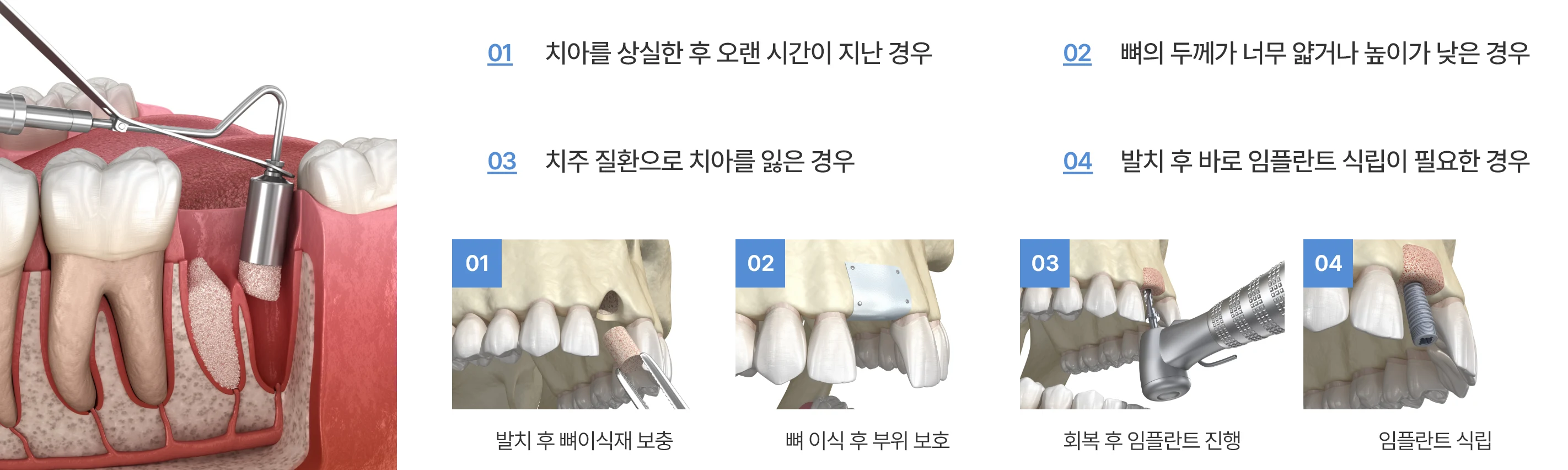
Bone graft implants reinforce weak or insufficient gum bone with graft material before the implant is placed.

Needed in these cases

  1. A long time has passed since tooth loss
  2. The bone is too thin or too low
  3. Teeth were lost to periodontal disease
  4. An implant needs to be placed right after extraction

Bone graft implant process

  1. 1Graft material added after extraction
  2. 2Protecting the graft site
  3. 3Implant treatment after healing
  4. 4Implant placement

Use of PDRN (PolyDeoxyRiboNucleotide)

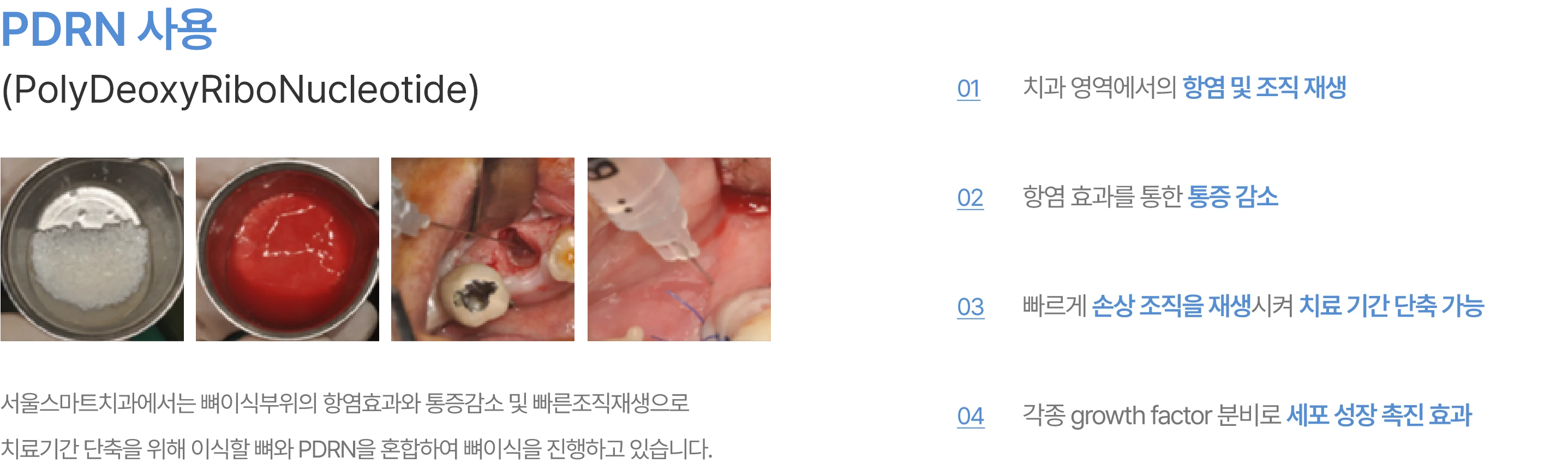
At Seoul Smart Dental Clinic, we mix PDRN with the graft material, aiming to support healing at the bone graft site.

  1. In dentistry: anti-inflammation and tissue regeneration
  2. Through anti-inflammatory action, may help reduce pain
  3. Helping regenerate damaged tissue may help shorten the treatment period
  4. Through the release of various growth factors, promotes cell growth
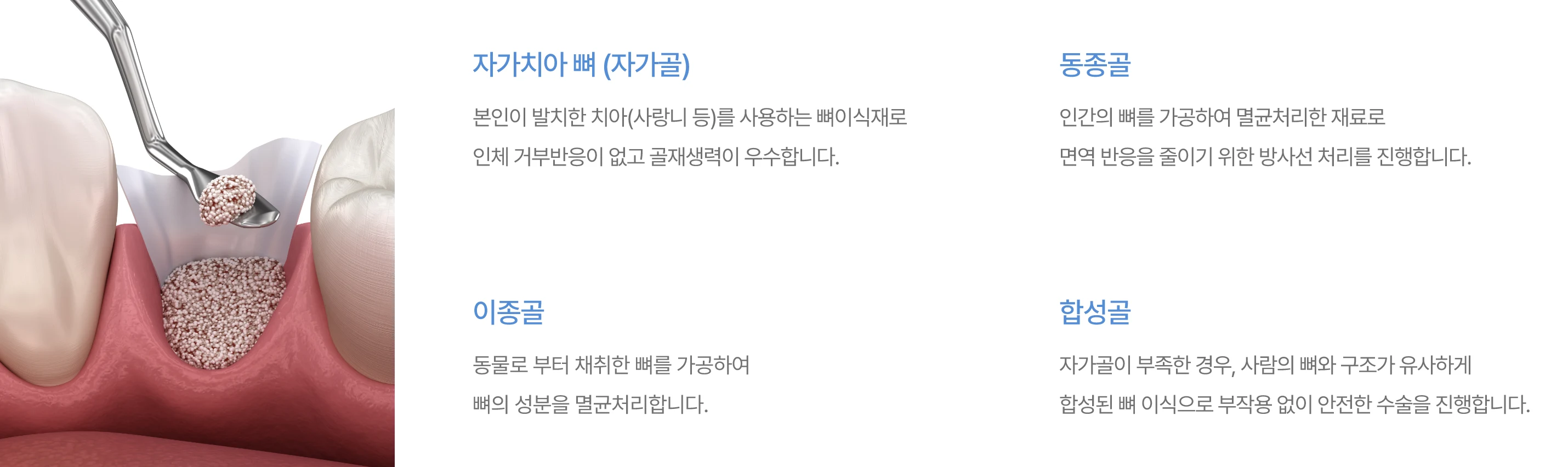
Autogenous tooth bone (autogenous bone)A graft material made from your own extracted tooth (e.g., a wisdom tooth), with a low risk of rejection and good bone regeneration potential.
AllograftProcessed and sterilized human bone, irradiated to reduce immune reactions.
XenograftBone taken from animals, processed and sterilized.
Synthetic boneWhen autogenous bone is insufficient, a synthetic graft with a structure similar to human bone is used, with careful surgical planning.
Step 06

Implants Revision Surgery

Implant revision should be approached with great care to avoid another failure.

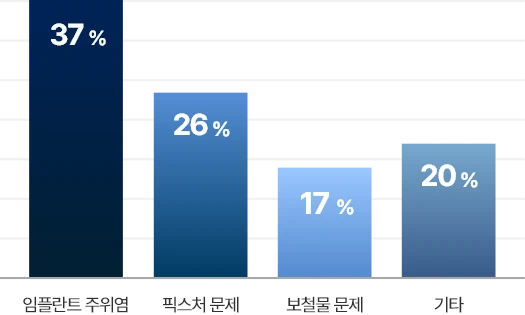
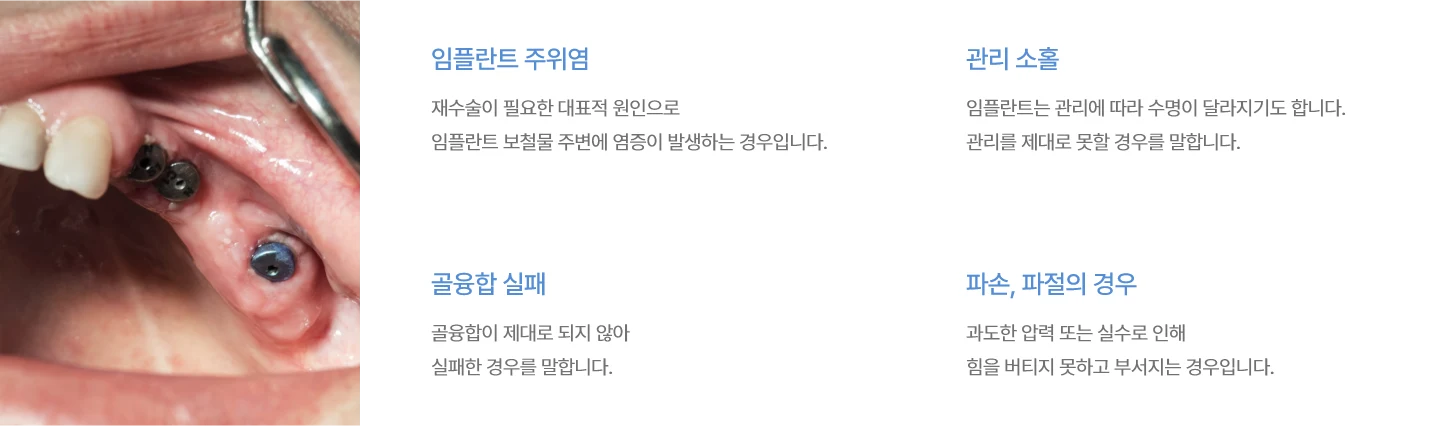
Implant failure has many causes, including peri-implantitis, fixture problems and prosthesis problems.
To minimize the risk of nerve damage and inflammation in revision surgery, an even more careful and expert approach than the first procedure is needed,
and treatment should proceed with a method suited to your teeth after thorough examination and sufficient consultation with the dentist.

Peri-implantitisThe most common reason for revision surgery: inflammation develops around the implant prosthesis.
Inadequate careAn implant's lifespan can vary with care. This refers to cases where it has not been cared for properly.
Osseointegration failureThis refers to failure because the implant did not integrate properly with the bone.
Breakage or fractureThis is when the implant cannot withstand forces and breaks due to excessive pressure or accident.

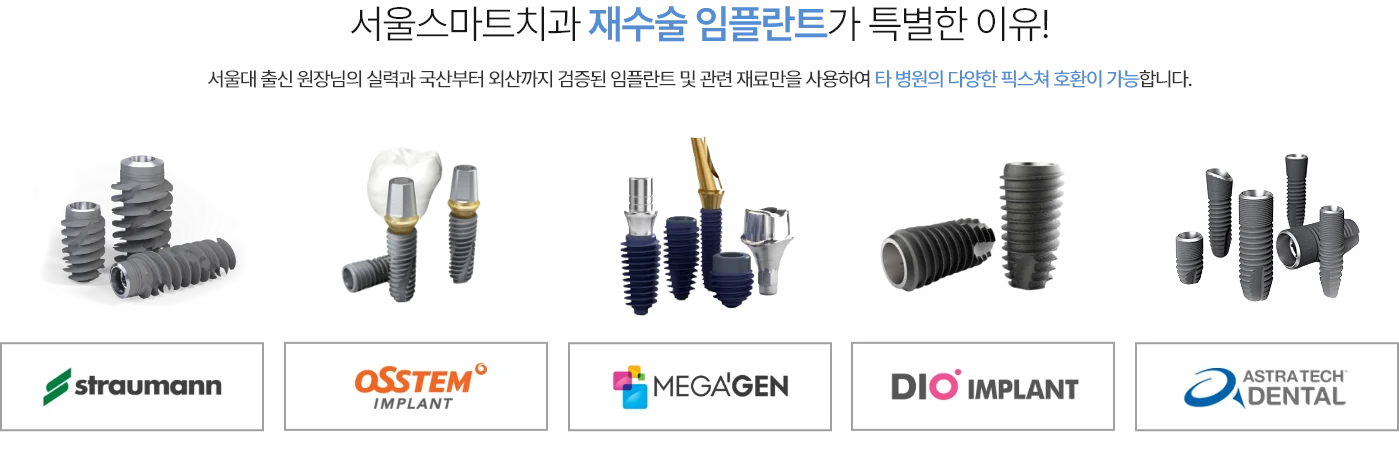
Seoul Smart Dental Implant revision— why ours is different!

With the skills of our dentists, including Seoul National University graduates, and using only verified domestic and international implants and related materials, compatible with various fixtures from other clinics.

  • Straumann
  • OSSTEM IMPLANT
  • MEGAGEN
  • DIO IMPLANT
  • ASTRA TECH DENTAL
Step 07

Insurance Implants

Insured implants have been available since July 2016, allowing people aged 65 or older
to reduce costs and restore dental health through National Health Insurance coverage for implant procedures.

Implants can be expected to function and look similar to natural teeth, but their cost has been a burden.
With expanded National Health Insurance coverage, patients aged 65 or older can now reduce the financial burden of dental treatment.
Seoul Smart Dental Clinic provides detailed consultation and guidance on insured treatment.

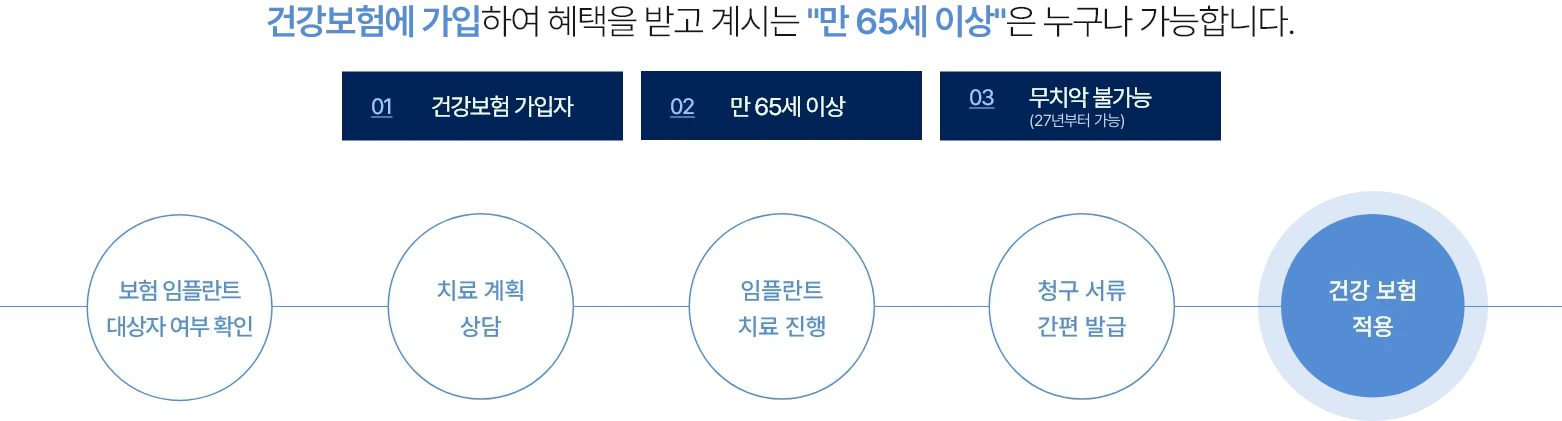
Enrolled in National Health Insuranceand receiving its benefits, "aged 65 or older"— anyone in this group is eligible.

  1. National Health Insurance subscribers
  2. Aged 65 or older
  3. Not available for fully edentulous patients (available from 2027)

Procedure

  1. 1Confirming eligibility for insured implants
  2. 2Treatment plan consultation
  3. 3Implant treatment
  4. 4Easy issuance of claim documents
  5. 5National Health Insurance applied
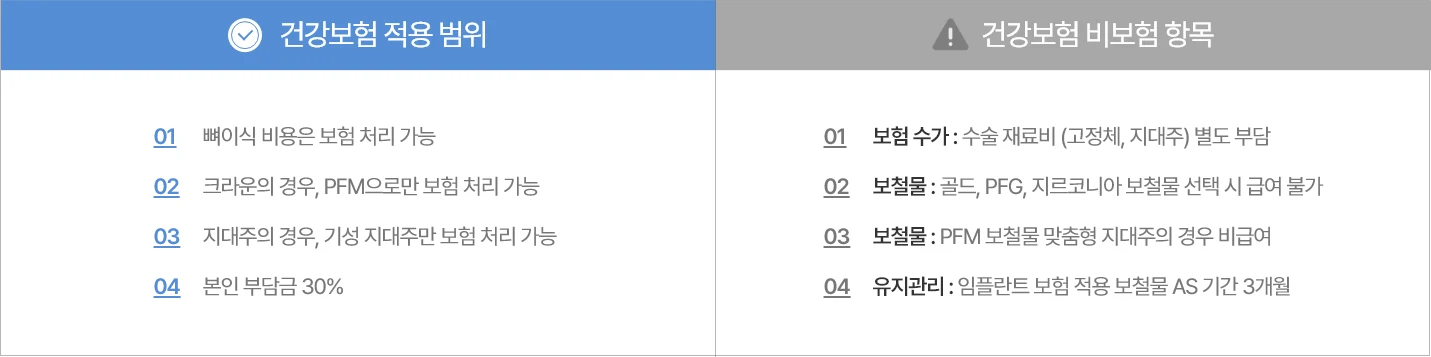
National Health Insurance coverage
  1. Bone graft costs can be covered by insurance
  2. For crowns, only PFM is covered by insurance
  3. For abutments, only stock abutments are covered by insurance
  4. 30% patient co-payment
Items not covered by National Health Insurance
  1. Insurance fee schedule : surgical material costs (fixture, abutment) paid separately
  2. Prosthesis : not covered if gold, PFG or zirconia prostheses are chosen
  3. Prosthesis : custom abutments for PFM prostheses are not covered
  4. Maintenance : aftercare period for insured implant prostheses: 3 months
Step 08

Seoul Smart Dental Clinic's With implants, treatment is not the end.

You had implant treatment,
but your dental clinic has closed?

With a wide range of materials, aftercare is well supported.
Abutment and prosthesis aftercare is flexible.

Poor bone —
are you worried your implant might fail?

Using quality bone graft materials, antibiotics and PDRN,
with careful attention to surgical outcomes and long-term prognosis.

Quality materials —
looking for a clinic that uses them?

Only verified implants and materials, domestic and international
(Straumann, Osstem, MegaGen, DIO, Astra fixtures)

After surgery,
do you want to check that it went well?

We give you a report with your surgical results.

Implant Care Instructions

Stopping bleeding

After surgery, bite firmly on the gauze to stop the bleeding.
(Spit out the gauze after 1 hour.)

Taking prescribed medication

Please take your prescribed medication
on time.

Avoid pressure

Because it can cause more bleeding, please avoid spitting or using straws
and do not blow your nose.

Avoid alcohol and smoking

For one week after surgery, as they interfere with recovery,
please strictly avoid alcohol and smoking.

may help reduce pain

To reduce pain and swelling at the surgical site,
apply a cold compress as directed by your dentist.

Severe pain

If you have severe pain or bleeding after surgery,
please contact the clinic and come in.

Avoid strenuous exercise

For one week after surgery, please avoid saunas, jjimjilbang (Korean bathhouses), half-body baths
and vigorous exercise.

Soft/liquid diet

For about 2–3 days after surgery, eat soft or liquid foods on the side opposite the surgery
and use a higher pillow.

Brushing and rinsing

Brush carefully so as not to touch the surgical site,
and rinse with an oral antiseptic solution.